
Deer-Resistant Perennials for Michigan Gardens With Realistic Expectations
Reduce browsing without promising a deer-proof garden
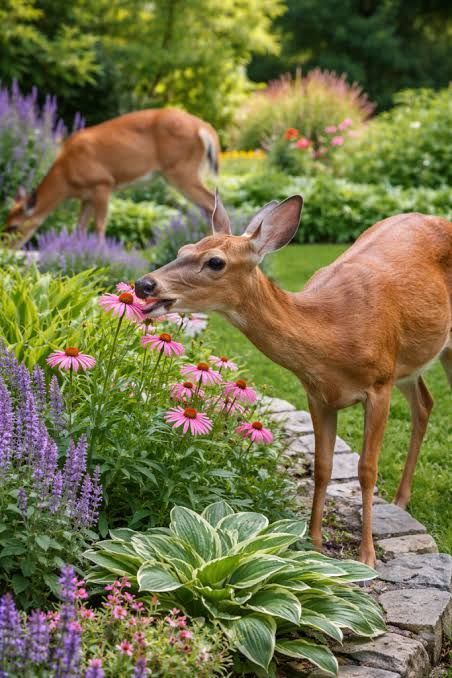
A freshly planted perennial can look perfect one evening and be clipped back by morning. Deer and rabbits browse in many Michigan neighborhoods, especially when preferred food is scarce or young plants are easy to reach. Some perennials are less appealing because of fragrance, leaf texture or taste, but no plant is guaranteed to be untouched.
A resilient perennial garden combines plant choice with site planning, protection and maintenance. The right approach depends on the animals present, the amount of pressure and the planting area. If browsing has been severe, use resistant plants as part of a broader plan instead of expecting one plant list to solve the problem.
Why certain plants are browsed less often
Many deer- and rabbit-resistant perennials have aromatic foliage, fuzzy or coarse leaves, prickly surfaces or strong flavors. Those traits can make them less attractive than tender alternatives. Lavender, salvia and catmint are examples of fragrant plants that often receive less attention. Coneflowers and black-eyed Susans can be more resistant than soft, succulent plants, though young growth may still be eaten.
Resistance is a tendency, not immunity. Animals learn, hunger changes preferences, and local wildlife behavior varies. A plant that is ignored in one yard can be sampled in another. If you have a newly planted bed, inspect it regularly during the first growing season and protect vulnerable plants before damage becomes severe.
Start with the conditions in your garden
Sunlight, drainage and soil are just as important as browsing resistance. Lavender, yarrow and Russian sage generally prefer sunny, well-drained locations; they may languish in shade or saturated clay. Hostas grow well in shade but are often attractive to deer and rabbits, so they are poor candidates for a high-pressure browsing area even if they suit the light.
For a perennial garden design in Southfield MI, note the hours of sun, soil moisture, mature plant width, salt exposure and access to water before selecting plants. Group varieties with similar needs. That makes irrigation and care easier, and helps the garden fill in without crowding. Do not force a sun-loving plant into shade just because its leaves are said to deter animals.
Build a varied planting palette
Lavender offers fragrance and purple blooms in sunny, well-drained beds. Salvia produces upright flower spikes and can attract pollinators. Catmint forms a softer mound, often blooming over a long season and responding well to a light trim after its first flush. These choices can create an aromatic front edge or pathway border, but each needs room to mature.
Coneflower and black-eyed Susan add summer color and seed heads that can continue to support wildlife after flowering. Yarrow brings flat clusters and fernlike foliage, while Russian sage contributes silver leaves and airy blooms. Bee balm offers bold color and pollinator value, though it may spread and can be susceptible to powdery mildew in crowded, poorly ventilated sites. Use the exact species and cultivar suited to the bed rather than planting every option at once.
Think in layers and repeat plants
A bed is easier to read when it has a few repeated forms rather than one of everything. Place taller perennials behind lower mounds, repeat a small group of salvia or coneflower through the bed, and use a low edge to connect the planting to a walk or lawn. This helps the design look intentional even when some plants are temporarily nipped back.
Respect mature dimensions on the label. A crowded perennial bed restricts airflow and can make mildew or other disease more likely. It also creates competition for water and encourages plants to lean into paths. Planting at the right spacing may look sparse in the first year, but the garden will be healthier as the plants mature.
Use physical protection for young plants
Newly installed perennials are more vulnerable than established clumps. A temporary wire cage, plant protector or fencing can keep rabbits from reaching young stems while roots develop. Deer may require a taller barrier, depending on the site and pressure. Check protective devices often so they do not rub, trap animals or interfere with plant growth.
Repellents can help when applied as directed and reapplied after heavy rain or new growth, but they require regular attention. Rotate products only according to their labels, and do not apply treatments to edible crops or near water unless the label permits it. In high-pressure areas, layered methods—resistant plants, barriers and consistent monitoring—are more realistic than relying on scent alone.
Make the garden less inviting to browsing
Keep vegetation near fences, gates and foundations from creating a sheltered route into the bed. Remove fallen fruit or other attractants where they draw animals close to new plants. Rabbits often browse close to cover, so keeping dense brush away from vulnerable beds can help. Deer behavior is broader and can vary across the neighborhood; a single tidy edge may not change their route.
Avoid overreacting with harsh or unverified remedies. Some home mixtures can injure plants, irritate people or pets, or fail after the first rain. Start with a site-appropriate barrier and a labeled product if needed, then track what works in your yard. A simple damage log can show which species are consistently avoided and which need protection.
Support pollinators as well as plant resilience
Many aromatic and textured perennials also provide nectar or pollen. Salvia, catmint, coneflower and bee balm can attract bees, butterflies or hummingbirds when they bloom. Leaving selected seed heads into winter adds structure and food for birds. Not every garden needs to be cut back completely in autumn; remove diseased foliage but consider keeping healthy stems where they offer habitat.
If you want a pollinator planting, choose a sequence of bloom times and include more than one species with similar floral value. A diverse garden is more resilient to changes in weather and pest pressure. It also looks more natural than a row of identical plants, though repeated groupings still create visual order.
When plants are still damaged
If deer or rabbits continue to browse a resistant plant, check whether the animal has alternatives nearby and whether the plant is young or tender. Temporary protection may be the most reliable short-term answer. If damage happens repeatedly to the same species, move it to a protected area or replace it with a less preferred plant better suited to the site.
Do not assume that every browned or clipped perennial has been browsed. Drought, waterlogged soil, frost and disease can cause similar symptoms. Look for ragged or clean-cut stems, tracks, droppings and the timing of damage, then confirm before changing your plant plan. Correct diagnosis avoids replacing a plant that was actually stressed by its growing conditions.
A practical strategy for a better garden
There is no universal list of plants animals will never eat. There are plants that are often less attractive, and strategies that reduce the chance of repeated damage. Pair plants suited to the light and soil with repeated groupings, sensible spacing, temporary protection and regular monitoring. Accept that a few losses may still happen, especially while plants are getting established.
- With realistic expectations, deer- and rabbit-resistant perennials can bring fragrance, color and pollinator activity to a Michigan yard. A locally tailored planting plan will account for both the garden’s growing conditions and the wildlife pressure you actually experience, creating a bed that is attractive and practical through the seasons.
For more articles on landscaping, garden maintenance, and hardscaping, click here.
Southfield Landscaping serves homeowners and businesses with lawn care, hardscaping, drainage, and year-round property care. We offer Lawn Care services to help you build the outdoor space of your dreams.